
Head of Research, Office of Eric Schmidt
Andrew Sorota
Mirror representation is incoherent as a design goal.
Democracy's deepest survival trait is its capacity to correct itself without violence, which depends on citizens being able to encounter what they do not already believe — what Arendt called “representative thinking.” Political representation has historically carried that function, living in the gap between the represented and their representative. Sorota's provocation is that “mirror representation” is incoherent as a design goal for civic agents: AI built as a flawless extension of a single user, admitting no other standpoint. His essays ask whether agentic representation can instead be recovered by widening, not narrowing, the standpoints a citizen reckons with.
Biography
Andrew Sorota is Head of Research (also titled Head of Strategic Initiatives) at the Office of Eric Schmidt, where he oversees special projects and thought leadership on AI, geopolitics, and the future of democracy, working closely with Josh Hendler on the AI and Democracy portfolio. He previously was a Research Associate at Schmidt Futures and Editorial and Strategy Lead for Fareed Zakaria at CNN. Sorota is concurrently pursuing a PhD in political theory at Yale University. His recent writing has appeared in The New York Times, MIT Technology Review, and Noema Magazine.
The Three Essays
Grounding
The epistemic layer — how AI is reshaping what citizens come to believe.
Visioning
The agentic layer — how AI agents act on citizens’ behalf, and what it means for them to represent us faithfully.
Demonstrating
The institutional layer — how democratic institutions govern in a world increasingly shared with AI agents.

Cyber Ambassador-at-large, Taiwan
Audrey Tang
From humans in the loop of AI to AI in the loop of humanity.
Democratic institutions are failing not because the public sphere has collapsed, but because the operating system beneath it — optimization, maximization, humans inserted in the loop of AI — extends a design stance into a domain that asks for an intentional one. Across three essays, Tang argues for a shift from MaxOS to an ethic of care, from humans in the loop of AI to AI in the loop of humanity, and from one rational public sphere to many bounded, federated communities: what Tang calls techno-communitarianism, with the practical goal of making polarization-reduction measurable the way CO₂ became measurable for climate, so the plural, not the consensus, becomes democracy's basic unit.
Biography
Audrey Tang is Taiwan's Cyber Ambassador-at-large and Senior Accelerator Fellow at the Oxford Institute for Ethics in AI, having served as Taiwan's first Digital Minister from 2016 to 2024, the world's first openly non-binary cabinet minister. A 2025 Right Livelihood Laureate for advancing digital technology to renew democracy, she also holds roles as Guest Curator at TED 2026, Senior Advisor at Mozilla Foundation, and Plurality Initiative Advisor at the Ethereum Foundation, and was named to TIME 100 AI (2023) and Foreign Policy's 100 Global Thinkers (2019). She left formal schooling at 14, became a computational linguistics consultant to Apple developing software used in Siri, co-founded the civic technology community g0v, and played a pivotal role in Taiwan's 2014 Sunflower Movement.
The Three Essays
Identify
MaxOS and the Operating System Beneath the Public Sphere — why optimization and maximization, not the “collapsed public sphere,” are the real problem.
Define
AI in the Loop of Humanity, and the Many Bounded Communities — techno-communitarianism and Civic AI as scaffolding that “composes away.”
Design
Legibility, Peace-Tech, and Measurable Polarisation-Reduction — polarization-reduction as measurable, plus civilian peace-tech infrastructure.

Founder and CEO, AI & Democracy Foundation
Aviv Ovadya
What is the good meta-org chart for democracy?
Ovadya's contribution maps what the intelligence infrastructure underlying democracy's checks and balances could look like as AI advances reshape it, intentionally or not. He sketches good versions of this infrastructure, focusing largely on the legislative branch but extending to executive, judicial, and other checks and balances, and flags the likely challenges ahead. The aim is to clarify what people and systems democratic institutions will need to hire, build, and procure to function in the age of AI: in effect, a “meta-org chart” for democracy that maps out the right mix of human and AI roles.
Biography
Aviv Ovadya is the founder and CEO of the AI & Democracy Foundation (AIDF) and a research fellow at newDemocracy, with affiliate appointments at Harvard's Berkman Klein Center, the Centre for the Governance of AI, and the Safra Center for Ethics's GETTING-Plurality network. He previously held roles as a Technology and Public Purpose Fellow at Harvard Kennedy School's Belfer Center and Chief Technologist at the University of Michigan's Center for Social Media Responsibility. He holds BS and MEng degrees in computer science from MIT, and his work has been covered by the BBC, NPR, The Economist, and The New York Times, with writing in WIRED, Bloomberg, Harvard Business Review, MIT Technology Review, and The Washington Post.
The Three Essays
Grounding
Infrastructure, not content — the intervention point should be structural (the systems that select, rank, and circulate content) rather than editorial.
Visioning
Reimagining Democracy for AI — four paradigm shifts: representative deliberations, AI augmentation, democracy-as-a-service, and platform democracy.
Demonstrating
Bridging-Based Ranking and Generative CI — drawing on empirically deployed work including Community Notes, Polis, and vTaiwan.

Carnegie Endowment for International Peace
Avril Haines
Associated Member
Avril Haines is President of the Carnegie Endowment for International Peace. She previously served as U.S. Director of National Intelligence, the first woman to hold the role, and as Deputy National Security Advisor and Deputy Director of the CIA. A biography and further detail will be published here in due course.

Professor, Northeastern University
Beth Simone Noveck
Democracy has no moonshot because we've misdiagnosed the problem.
Noveck's provocation argues that democracy lacks a transformative vision because it has misdiagnosed the challenges of the information age. She contends that democratic institutions were built for information scarcity and have failed to adapt to an era of abundance, where public voice has expanded but institutional capacity to listen and learn has not. She calls for a democratic “moonshot”: a sustained effort to redesign institutions as informational systems capable of gathering collective intelligence at scale and measuring success through meaningful outcomes rather than participation alone.
Biography
Beth Simone Noveck is a Professor at Northeastern University spanning law, engineering, policy, and computer science, where she directs the Burnes Center for Social Change and the Governance Lab (GovLab), and founded InnovateUS, AI for Impact, and the Observatory of Public Sector AI. She has held senior public-service roles under President Obama (US Deputy CTO, founding the White House Open Government Initiative and data.gov/challenge.gov), UK Prime Minister David Cameron, and Chancellor Angela Merkel's Digital Council, and served as New Jersey's founding Chief Innovation Officer and first Chief AI Strategist. She holds degrees from Harvard, Yale Law School, and the University of Innsbruck, with an honorary doctorate from Geneva.
The Three Essays
Identify
Why democratic institutions struggle to solve public problems in the age of AI.
Define
How Democratic AI can strengthen collective intelligence and democratic governance.
Design
How AI can be deployed in practice to redesign democratic institutions and public services.

Head of Projects, Collective Intelligence Project
Evan Hadfield
Voice without a pipeline is legitimacy theater.
Hadfield's provocation argues that the central democratic deficit is not a lack of public participation but the absence of institutions that translate collective deliberation into meaningful governance. He contends that AI makes it possible to build this missing infrastructure by enabling structured public dialogue at scale, identifying shared priorities and points of disagreement, and translating them into transparent governance principles. In this vision, democratic legitimacy depends not on AI itself but on making the entire process — from public input to synthesis, implementation, and accountability — open, inspectable, and repeatable.
Biography
Evan Hadfield is Head of Projects at the Collective Intelligence Project (CIP), where he leads the design and implementation of AI-enabled public participation systems. He has led flagship initiatives including Global Dialogues, the Global Representativeness Index, and Digital Twins Evaluation, developing practical infrastructure for collective intelligence and digital democracy. With a background in human computation and applied AI, including roles at Twitter and Clara Labs, his work focuses on building systems that enable large, diverse publics to inform governance.
The Three Essays
Identify
Why consultation without a binding feedback loop becomes "legitimacy theater," and why current approaches cannot resolve it.
Define
How standing assemblies can produce living constitutions that reshape democratic participation.
Design
A roadmap from prototype to institution, showing how organizations can adopt the process to make democratic reform operational.
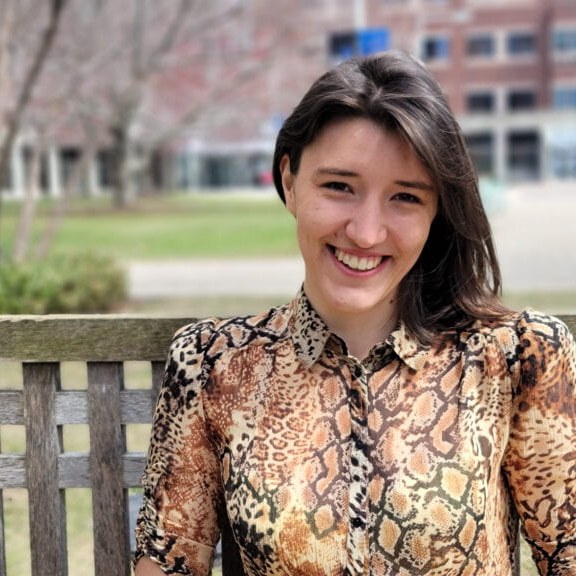
Joining after summer 2026
Manon Revel
Provocation to come.
Manon Revel joins the working group after the summer. Her biography and Provocation will be published here in due course.

Associate Professor, University of Amsterdam
Petter Törnberg
We are at the end of social media. How do we shape what comes after?
The end of social media has arrived. The question is how what comes after gets shaped. That era promised participation but built an economy of capture, rewarding conflict, outrage, and affective escalation because those extract data best. As it is displaced by algorithmic broadcasting, semi-private enclaves, and AI-mediated infrastructures, a rare moment of institutional plasticity opens. Across three essays, Törnberg develops a political economy of attention, on the claim that attention is a democratic resource that cannot be left to commodification.
Biography
Petter Törnberg is Associate Professor in Computational Social Science at the University of Amsterdam, based at ILLC, where he leads the research unit AI, Culture & Society. He holds a PhD in Complex Systems and a Habilitation from Chalmers University of Technology, with prior posts in geography at Neuchâtel and UvA, and is a member of De Jonge Akademie (KNAW). Within the working group, he brings a critical theoretical voice from inside computational practice itself, a practitioner of large N and LLM based methods who is also their sharpest critic, serving as a natural counterweight to the group's more optimistic infrastructural and civic AI voices.
The Three Essays
Grounding
The extractive attention economy — how social media remade political life around conflict and outrage.
Visioning
The post-social condition — participatory platforms displaced by algorithmic broadcasting and AI-mediated infrastructures.
Demonstrating
Attention as democratic infrastructure — what a redesigned, democratically governed attention infrastructure requires.

Inaugural Jeff Price Chair in Digital Law, King's College London
Sylvie Delacroix
Uncertainty is not a bug to calibrate away.
If democratic theory is shifting from communication to infrastructure, then the ways AI systems represent and surface uncertainty become constitutive, rather than peripheral, to democratic life. Drawing on participatory research with GPs and educational assessors, as well as the NAVIGATE research programme, Delacroix argues that current LLM design often treats non-quantifiable uncertainty as a calibration problem to be eliminated, undermining the professional norms and collective judgment that sustain expertise. Her provocation contends that informational democracy requires conversational infrastructures that preserve, rather than suppress, productive uncertainty.
Biography
Sylvie Delacroix is the inaugural Jeff Price Chair in Digital Law at King's College London and Director of the Centre for Data Futures. Her research explores how law, AI, and digital governance can strengthen human agency, with a particular focus on participatory infrastructures, data governance, and trustworthy AI. She has advised the UK government on AI and algorithms, co-founded the world's first data trust pilots, and her work has been supported by organizations including the Patrick J. McGovern Foundation, Wellcome Trust, Mozilla Foundation, and Omidyar Network.
The Three Essays
Identify
Calibration as the Wrong Frame for Uncertainty — why calibration-based approaches to AI uncertainty are insufficient in morally complex professional contexts, and how they can undermine human judgment and agency.
Define
Conversational Infrastructure that Sustains Productive Uncertainty — a vision of AI as conversational infrastructure that supports productive uncertainty, ethical reflection, and collective sense-making.
Design
Participatory Prototypes and Practice-Internal Norms — participatory AI prototypes that enable professional communities to shape how uncertainty is surfaced in practice.

Associate Research Scholar, Yale University
Théophile Pénigaud
Today's LLMs are weapons of mass destruction for responsibility.
Since the “Transformer” turn, LLMs have become central to the machine-learning revolution — but that revolution was more contingent than it now appears. Pénigaud's provocation is that today's LLMs constitute weapons of mass destruction for human morality and responsibility, replacing humanly grounded motivation with “orphan reasons” that blur who is accountable for a decision. But LLMs and chatbots should not be conflated: unlike human-like chatbots, LLMs' capacities might instead be leveraged to improve democratic processes, if what AI is for, how it is financed, and who controls it are rethought.
Biography
Théophile Pénigaud is an Associate Research Scholar in the Department of Political Science at Yale University (MacMillan Center) and an external postdoctoral fellow at Yale's Institution for Social and Policy Studies (ISPS), where he collaborates with Hélène Landemore on the intersection of AI ethics and deliberative democracy. He is also affiliated with Sciences Po's CEVIPOF and the Sciences Po Centre for History. A former student of the École Normale Supérieure de Lyon, he was agrégé in philosophy (ranked 2nd in the 2011 agrégation) and holds a PhD in Philosophy from ENS Lyon (2018), with doctoral work on the role of the people's deliberations in Rousseau's political philosophy. Before joining Yale in July 2023, he directed a Junior Laboratory on “Changes and Current Challenges of Democracy,” and he currently works on the Bpifrance-funded “Democratic Commons” project, developing an openly shared model for evaluating AI political biases.
The Three Essays
Grounding
Anchored in Les Délibérations du peuple (2024), his doctoral work on Rousseau’s account of popular deliberation.
Visioning
Anchored in “Truth, the People, and Climate Change: Toward a Non-Ideal Approach to Democratic Legitimacy” (2024).
Demonstrating
“AI-Enhanced Deliberative Democracy and the Future of the Collective Will” with Manon Revel (2026) — introducing “AI Reflectors.”